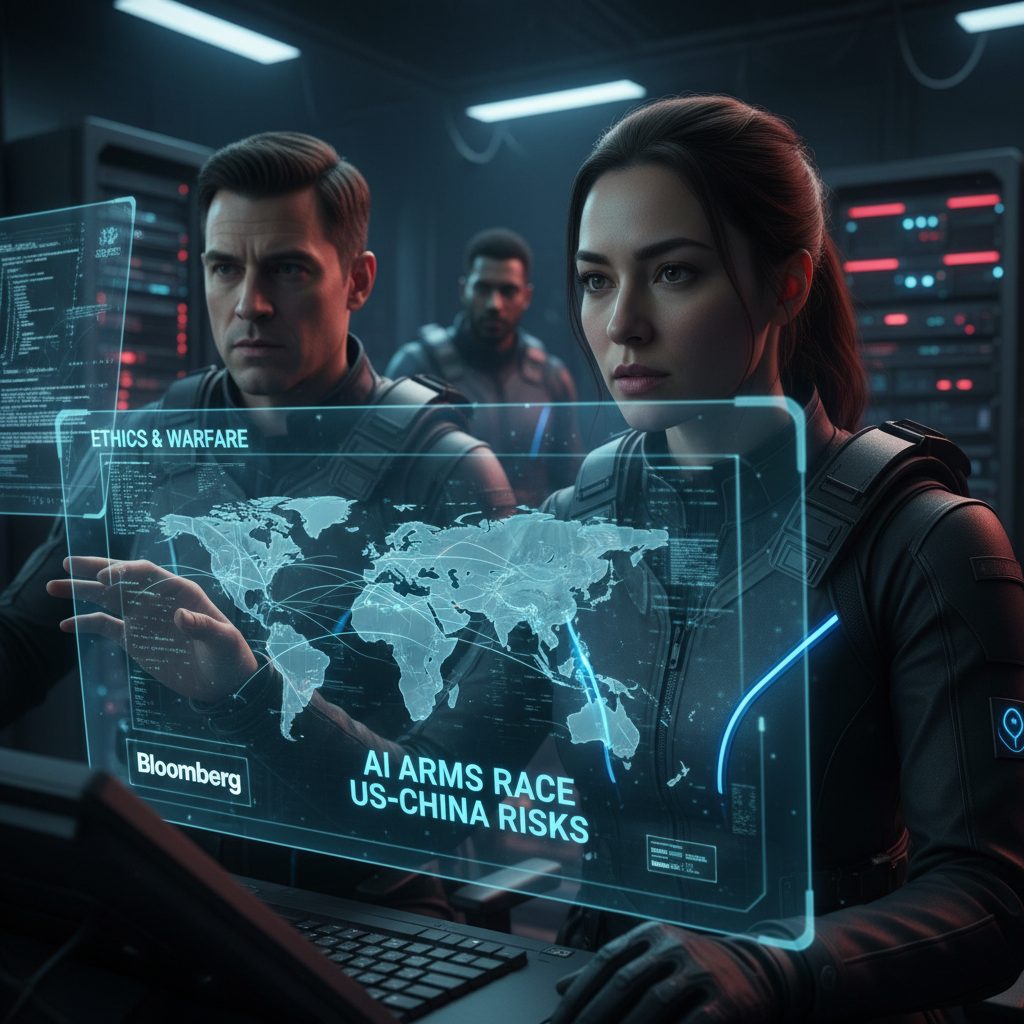
The future of conflict is no longer a distant sci-fi fantasy; it’s here, and it’s being shaped by artificial intelligence. A recent Bloomberg Tech report, aired on March 27, 2026, vividly describes how AI is not merely an enhancement to military capabilities but a primary driver of a new global arms race. This intense competition is fundamentally reshaping warfare with algorithms, sophisticated sensors, and autonomous systems, while simultaneously raising urgent ethical questions about geopolitics and the speed of decision-making, particularly in potential flashpoints like US-China conflicts.
AI's Imperative: Outpacing Human Reaction
The report emphasizes a critical strategic shift: human reaction times are becoming insufficient for the speeds and complexities of modern battlefields. Nations globally are accelerating their investment in AI, with countries like China at the forefront, developing AI for scenarios where milliseconds dictate outcomes. From predictive intelligence and automated logistics to AI-powered targeting and autonomous drones, these systems promise unparalleled speed, precision, and scale. The ability of AI to process vast datasets, identify intricate patterns, and execute decisions far beyond human cognitive limits is creating a new strategic imperative for every major power to develop robust AI military capabilities.
The Ethical Minefield and Geopolitical Crossroads
As AI permeates the domain of warfare, it ushers in a new era of profound ethical dilemmas. Questions surrounding accountability for lethal decisions made by autonomous systems, the potential for unintended escalation, and the reduced time for de-escalation in machine-speed conflicts are becoming increasingly pressing. The Bloomberg Tech report highlights these urgent ethical challenges as intrinsically linked to the broader geopolitical landscape. The deployment of AI in warfare risks lowering the threshold for conflict, introducing unprecedented levels of volatility, and complicating international relations through new layers of unpredictability.
US-China Conflict: The Peril of Imperfect Algorithms
Perhaps the most acute concern underscored by the report revolves around potential conflicts between major global powers, specifically the United States and China. In such high-stakes scenarios, where AI-driven systems on both sides could be operating at lightning speeds, the inherent imperfections of even the most advanced AI models pose a catastrophic threat. A misinterpretation, a subtle bias in training data, or an unforeseen system failure could rapidly spiral into uncontrollable escalation. The report serves as a stark warning: while AI's imperfections might be manageable in other domains, on a battlefield determining the fate of nations, they represent an existential risk of unprecedented proportions.
Navigating the New Era of Conflict
As AI continues its undeniable march into military applications, the global community stands at a critical juncture. The Bloomberg Tech report is a potent reminder that while AI promises transformative capabilities, it also demands an equally transformative level of responsibility. Navigating this new global arms race requires not just continued technological innovation but also a concerted effort towards robust international dialogue, the development of clear ethical frameworks, and a collective commitment to ensuring that humanity retains control over the algorithms designed to protect it.
Harness Your Own Private AI Workforce
The strategic implications of AI are clear: control, security, and dedicated capabilities are paramount. Just as nations strive for sovereign AI, your organization can benefit from a custom, private AI agent designed exclusively for your strategic needs.
Discover how you can implement your own secure, private, and fully yours AI agent to transform your operations and gain a strategic edge.
Explore AI Solutions at AISolutionsIreland.ie