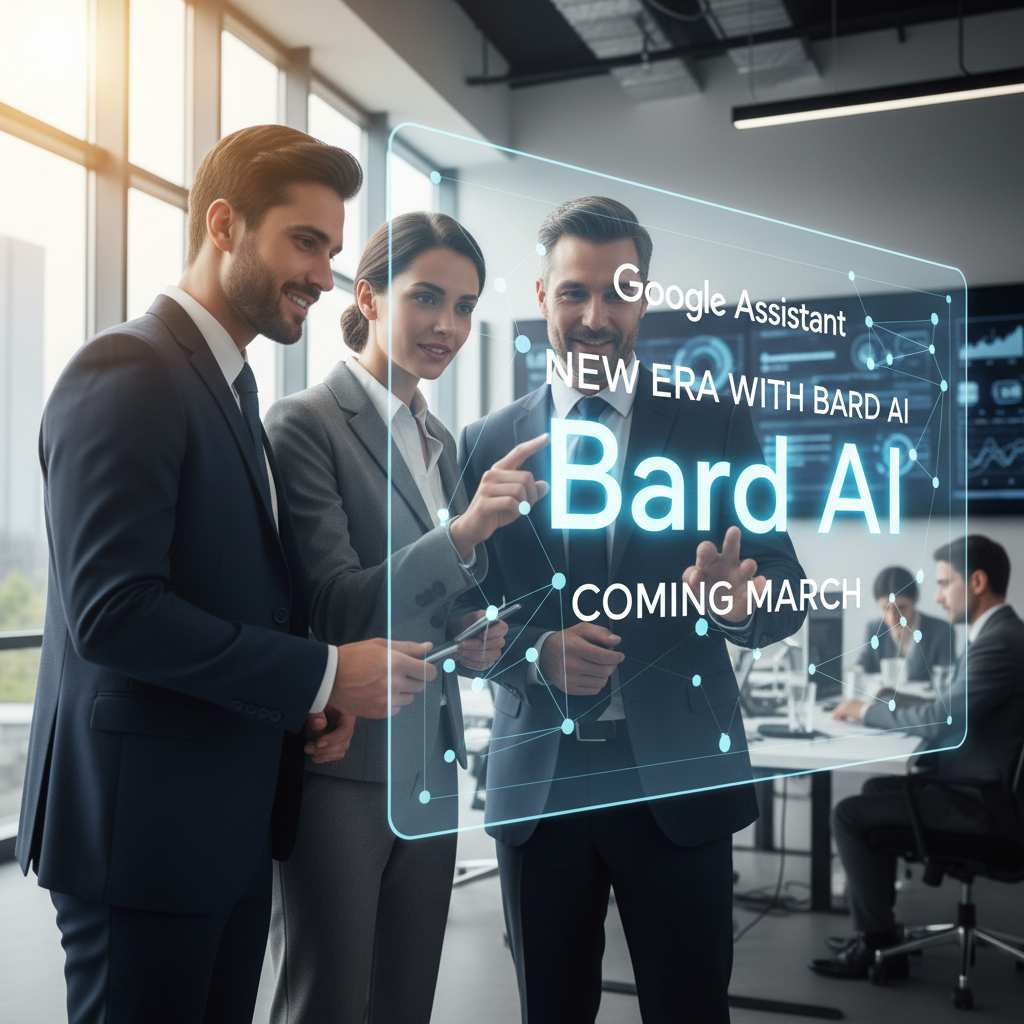
Reports indicate that Google is set to integrate its Bard AI model into the Google Assistant, with a potential rollout as soon as March, marking a significant upgrade to the voice assistant's capabilities.[1] This move signals a fundamental shift in how users will interact with their devices, transforming the familiar Assistant into a far more intelligent and conversational companion.
The Evolution from Commands to Conversation
For years, Google Assistant has been a reliable utility, excelling at executing commands, setting reminders, playing music, and answering direct questions. Its strength lay in its ability to quickly interpret specific instructions. However, the rise of advanced generative AI models like Bard has opened the door to a new paradigm: truly conversational and contextual understanding.
Integrating Bard means the Assistant will no longer be limited to predefined scripts or keyword recognition. Instead, it will leverage Bard's sophisticated natural language processing to understand complex queries, engage in multi-turn dialogues, and even infer user intent from nuanced language. This leap enables a more natural, human-like interaction, moving beyond simple task execution to genuine digital assistance.
Unlocking New Capabilities and Experiences
With Bard under the hood, the Google Assistant is poised to offer a suite of enhanced functionalities. Imagine asking your Assistant to "plan a weekend trip that involves hiking, a good restaurant, and is within a two-hour drive," and receiving a comprehensive itinerary, complete with personalized suggestions and booking links. Or perhaps instructing it to "summarize the key points of that long email I just received" and getting an instant, concise overview.
Beyond information retrieval and task management, the Bard-integrated Assistant could also become a creative partner. Users might brainstorm ideas, draft messages, or even generate simple content directly through voice commands. This transformation broadens the Assistant's utility from a helpful tool to an indispensable personal AI, capable of learning, adapting, and contributing creatively to daily life.
A Glimpse into the Future of Human-AI Interaction
The potential rollout in March suggests Google is keen to rapidly bring these advanced AI capabilities to its vast user base. This integration is more than just an update; it's a strategic move to redefine the role of voice assistants in an AI-first world. As users become accustomed to more intelligent, context-aware interactions, the line between digital assistant and trusted collaborator will continue to blur.
This development is set to ignite further innovation across the tech landscape, pushing other platforms to enhance their own AI offerings. For consumers, it promises a smoother, more intuitive digital experience, where technology anticipates needs and engages in meaningful ways. Google's Bard-integrated Assistant is not just an upgrade; it's a clear signal of a new era in human-computer interaction.
[1] Source: Reports indicate (as per prompt).
Build Your Own Intelligent Assistant & Automations
Inspired by Google's leap in AI integration? Your business can also leverage the power of custom AI to streamline operations, enhance customer interactions, and unlock new opportunities. Our Custom AI Agent for Workflow Development service is designed to translate your unique vision into robust, scalable AI-powered workflows.
Whether you need to connect multiple platforms, automate complex processes, or create entirely new intelligent solutions tailored to your exact requirements, our team designs and delivers future-proof automations that integrate effortlessly with your existing systems.
Discover how custom AI can transform your business:
Explore Custom AI Solutions